
For most buyers in 2026, Micro-ATX is the sweet spot — full gaming performance, smaller cases, and boards from around $120 (~Rs 33,200). Pick ATX if you want maximum expansion (multi-GPU-style workloads, 4+ M.2 drives, heavy overclocking). Choose Mini-ITX only for compact living-room or desk builds, and budget ~$170+ (~Rs 47,100+) because small boards cost more. All prices below are approximate 2026 market estimates.
Table of Contents
- Motherboard Sizes Explained: ATX, Micro-ATX, Mini-ITX
- ATX vs Micro-ATX vs Mini-ITX: Comparison Table
- Best Motherboards by Size in 2026 (PKR + USD Prices)
- Which Size Should You Buy? Gaming vs Office vs Compact Builds
- Common Myths About Motherboard Size
- Buying a Motherboard in Pakistan: Local Tips
- Frequently Asked Questions
- Final Verdict
Motherboard Sizes Explained: ATX, Micro-ATX, Mini-ITX
A motherboard's form factor is simply its physical size — and that size decides how much expansion room you get. All three sizes below use the same CPU sockets and memory standards; a Micro-ATX B650 board runs a Ryzen chip exactly as fast as a full ATX B650 board. What changes is the number of slots, ports, and the case you need.
- ATX (305 × 244 mm) — The full-size standard. Typically 4 RAM slots, 3–4 M.2 slots, multiple PCIe x16/x1 slots, and the most rear USB ports. Needs a mid-tower or full-tower case.
- Micro-ATX / mATX (244 × 244 mm) — The compact mainstream choice. Usually 4 RAM slots (2 on the cheapest boards), 2–3 M.2 slots, one full PCIe x16 slot plus a couple of x1 slots. Fits in mid-tower and many smaller cases.
- Mini-ITX (170 × 170 mm) — The tiny one. Just 2 RAM slots, 1 PCIe x16 slot, 2–3 M.2 slots, and fewer rear ports. Requires a dedicated Mini-ITX case and careful part selection (cooler height, PSU size).
If you are new to motherboards entirely, start with our complete motherboard buying guide which covers chipsets (B650 vs B850 vs Z890), DDR4 vs DDR5, and VRM basics — then come back here to pick the right size.
ATX vs Micro-ATX vs Mini-ITX: Comparison Table
| Feature | ATX | Micro-ATX | Mini-ITX |
|---|---|---|---|
| Board size | 305 × 244 mm | 244 × 244 mm | 170 × 170 mm |
| RAM slots | 4 | 4 (2 on cheapest) | 2 |
| PCIe x16 slots | 2–3 | 1–2 | 1 |
| M.2 SSD slots | 3–5 | 2–3 | 2–3 |
| Typical board price | ~$160–250 | ~$120–180 | ~$170–280 |
| Case needed | Mid/full tower | Mid tower or compact | Mini-ITX case |
| Best for | Max expansion, OC | Most gamers & offices | Small / living-room PCs |
Price bands are approximate 2026 market estimates for B650/B850-class AMD boards; Intel LGA1851 equivalents run slightly higher. PKR conversions use ~Rs 277 = $1.
Best Motherboards by Size in 2026 (PKR + USD Prices)
Representative 2026 picks per form factor. USD figures are approximate 2026 market estimates (live retailer prices fluctuate daily); PKR figures are approximate Pakistan-market estimates — local shops typically add 15–25% over converted US prices after duties and margins.
Micro-ATX Picks (Best Value)
ASUS B650EM MAX Gaming WiFi (~$120 / ~Rs 33,200) — the cheapest sensible AM5 entry: micro-ATX, DDR5, PCIe 5.0-ready, Wi-Fi 6, three M.2 slots. Perfect budget foundation for a Ryzen 5 build. MSI PRO B650M-P (~$150 / ~Rs 41,600) — a no-frills workhorse with 2.5G LAN and dual Gen4 M.2; ideal for office and student PCs. Gigabyte B650M AORUS Elite AX (~$160–200 / ~Rs 44,300–55,400) — stronger VRMs and Wi-Fi 6E for gaming rigs on a budget. See our budget motherboard guide for the full under-$150 breakdown.
ATX Picks (Maximum Expansion)
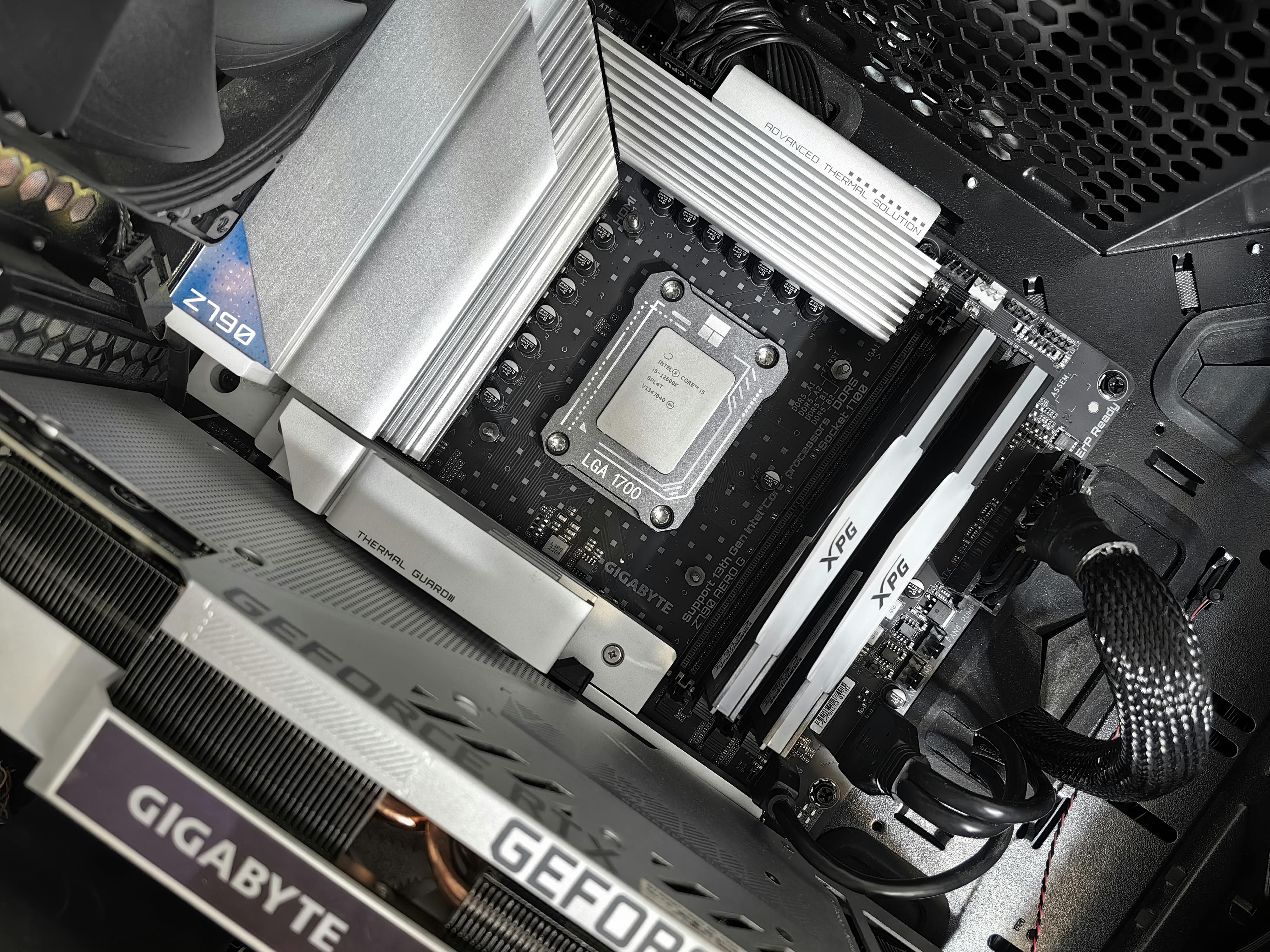
ASUS TUF Gaming B650E-Plus WiFi (~$133–170 / ~Rs 36,800–47,100) — frequently discounted, with 12+2+1 power stages, PCIe 5.0, three M.2 slots and Wi-Fi 6E; arguably the best-value full ATX AM5 board of 2026. ASUS ROG Strix B650-A Gaming WiFi (~$190 / ~Rs 52,600) — a step up in audio, USB count and aesthetics for showcase builds. On Intel's side, ASUS Prime Z890-P WiFi (~$240 / ~Rs 66,500) is the entry point to LGA1851 ATX with PCIe 5.0 and Wi-Fi 7. Pair any of these with a roomy case from our gaming PC case buying guide.
Mini-ITX Picks (Compact Builds)
ASRock B650I Lightning WiFi (~$170 / ~Rs 47,100) — the cheapest way into a proper AM5 small-form-factor build: Wi-Fi 6E, PCIe 5.0 M.2, 8+2+1 power stages. Gigabyte B650I AORUS Ultra (~$275 / ~Rs 76,200) — premium ITX with triple M.2 and heavyweight VRMs for dense, high-end SFF gaming rigs. Remember: ITX boards cost more per feature than mATX, and you will also need an SFX power supply and a low-profile or 240mm AIO cooler. Our Mini PC buying guide covers complete compact systems if you would rather not build from scratch.
Which Size Should You Buy? Gaming vs Office vs Compact Builds
- Gaming PC (single GPU): Micro-ATX. One PCIe x16 slot is all a graphics card needs; you keep 4 RAM slots and 2–3 M.2 slots while saving money and case space. ATX only pays off if you plan multiple expansion cards or 4+ NVMe drives.
- Office / student / family PC: Micro-ATX. Cheapest boards, smallest sensible cases, zero performance compromise for everyday work.
- Living-room / portable / desk-showpiece PC: Mini-ITX. Accept the price premium and the building challenge in exchange for a PC the size of a shoebox. Plan the cooler, PSU and GPU length carefully — measure twice.
- Workstation / heavy overclocking / future expansion: ATX. More VRM headroom, more M.2 slots, more USB — the board disappears as a limitation for years.
Common Myths About Motherboard Size
Myth 1: "Bigger boards are faster." False. A B650 chip performs identically on ATX, Micro-ATX and Mini-ITX — speed comes from the chipset, CPU and memory, not the PCB dimensions.
Myth 2: "Micro-ATX is low quality." False. Budget mATX boards cut ports and slots, not reliability — a $150 mATX board from a major brand is a perfectly durable daily driver.
Myth 3: "Mini-ITX always overheats." Only in badly planned builds. With a mesh ITX case and sensible cooler choice, thermals match mid-towers; the penalty is building difficulty, not temperature.
Buying a Motherboard in Pakistan: Local Tips
- Where to buy: Hall Road Lahore and Techno City Karachi stock the widest range — compare 2–3 shops, and always ask whether the price quoted is for the exact model number (B650M vs B650, WiFi vs non-WiFi variants differ by thousands of rupees).
- Bundle discount: buy the CPU and motherboard together — most Hall Road shops cut the board's price when bundled with a processor.
- Check the box: confirm the socket (AM5 vs LGA1851) printed on the box matches your CPU before paying; returns on opened boards are painful.
- Warranty matters more here: insist on a board with official local distributor warranty (usually 1 year); grey-import boards are cheaper until something fails.
- ITX warning: Mini-ITX boards and SFX PSUs are harder to find locally and carry bigger markups — if you are set on a tiny build, confirm availability of the case, PSU and cooler in the same market trip.
Frequently Asked Questions
Does motherboard size affect gaming performance?
No. Given the same chipset, CPU and RAM, ATX, Micro-ATX and Mini-ITX boards deliver identical gaming FPS. Size only changes expansion options — slots, ports and drive connectors.
Can I fit a Micro-ATX motherboard in an ATX case?
Yes — ATX cases accept ATX, Micro-ATX and Mini-ITX boards (the mounting holes are standardized). The reverse is not true: an ATX board will not fit in a Micro-ATX or Mini-ITX case.
Is Mini-ITX worth the extra cost in 2026?
Only if you genuinely need a tiny PC. You pay more for the board, need an SFX PSU, and have fewer upgrade options. For everyone else, Micro-ATX gives the same performance for less money and effort.
How many M.2 slots do I really need?
Two is enough for most people (one fast drive for Windows + one for games/storage). Content creators and heavy users benefit from three or more, which pushes you toward ATX or higher-end Micro-ATX boards.
What motherboard size is best for a first-time builder?
Micro-ATX in a mid-tower case. You get plenty of room to work, cheaper parts, full performance, and none of the cable-routing puzzles that Mini-ITX builds demand.
Final Verdict
In 2026, Micro-ATX wins for most people — full performance, sensible prices from ~$120 (~Rs 33,200), and cases that don't dominate your desk. Go ATX when expansion is the whole point of the build, and Mini-ITX when the build must be tiny. Whatever size you choose, match the socket to your CPU first, buy board + CPU as a bundle on Hall Road or at Techno City for the best local price, and insist on distributor warranty.
Pentium Tech Hub covers computers, laptops, networking and hardware with practical buying guides for readers in Pakistan and beyond — every recommendation checked against real 2026 market prices in both PKR and USD, so you know exactly what a fair deal looks like before you walk into Hall Road or click "buy."
Post a Comment